OS 002 - Psychedelia
Welcome to the hidden heart of Psychedelia. Behind this special compilation lies a world of rare recordings, cult bands, and stories from the pioneers of psychedelic, hard-rock, and neo-psych.
Curated in collaboration with Guerssen Records, one of Europe’s most adventurous reissue labels, this special edition champions deep gems too good to be forgotten. Since 1996, Guerssen has been digging up lost gems from every corner of the world, from 60s garage and psych to Middle Eastern folk-funk and beyond.
Together, we’ve opened the vault to bring you Psychedelia, our second special edition compilation.
Power Trios & Psychedelic Fire
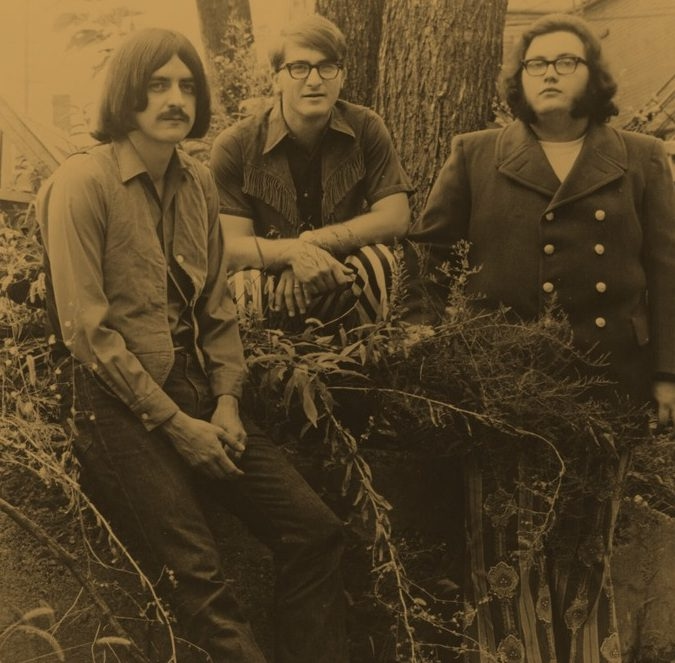
B.F. Trike
From Indiana’s small-town garages came the raw energy of B.F. Trike—a power trio formed by Mike McGuyer (guitar), Alan Jones (bass), and Bobby Strehl (drums).
Their acid-drenched riffs and melodic hooks distilled psychedelic hard-rock into something both heavy and transcendent.
 B.F. TRIKE
Wicked Lady
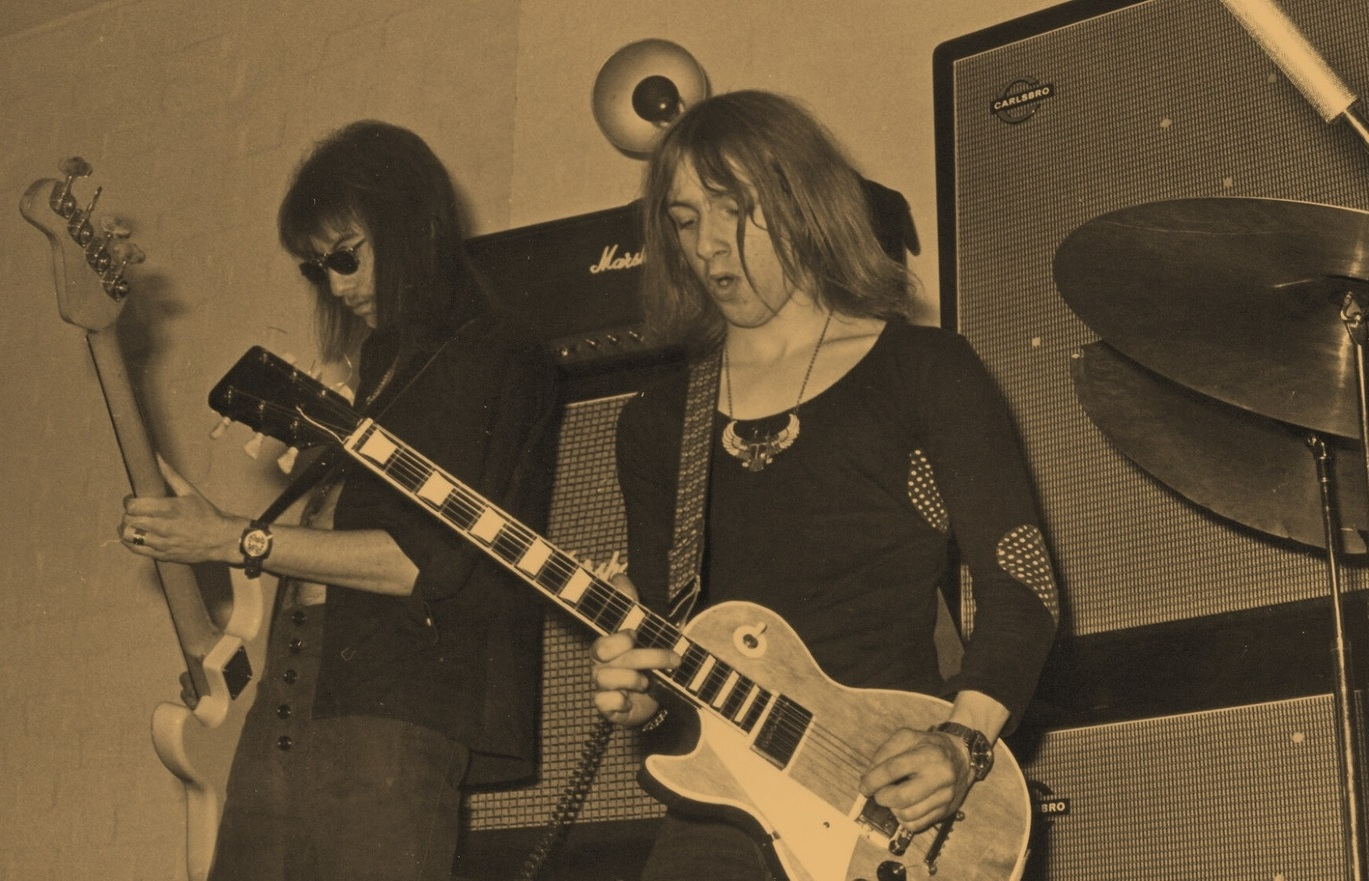
Northampton, 1968: Martin Weaver plugs in his fuzz-wah guitar, and chaos ensues. With Dick Smith on drums and Bob Jeffries on bass, Wicked Lady became a proto-doom cult act whose reputation rested on feedback-drenched live shows and a loyal biker following. Their raw Revox-recorded sets (1969–72) captured the sound of a band unafraid to push into the abyss—before madness and fate brought their journey to an end.
 WICKED LADY
Cult & Obscure Visionaries
Oliver
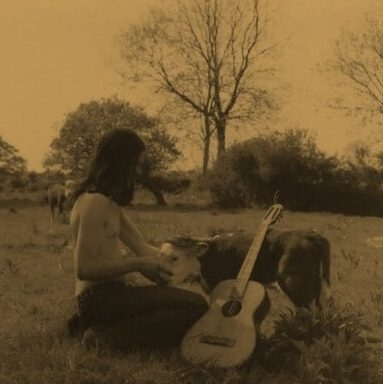
A Welsh farm. A 4-track Teac machine. A farmer-musician named Oliver Chaplin. The result: Standing Stone (1974), one of the rarest UK private pressings ever made. With his brother Chris (a BBC engineer who’d worked on Syd Barrett sessions) at the controls, Oliver conjured a mutant-psychedelic blues sound—DIY, lo-fi, but utterly timeless. Only 250 copies exist.
 Oliver
Virgin Records came knocking, JJ Cale invited him to jam—but Oliver walked away, choosing freedom over fame.
Bloody Mary
Little is known about Bloody Mary, a mysterious studio project with ties to Alive N Kickin’. What remains is their 1974 release on Artie Ripp’s Family Productions: a molten slab of proto-metal and heavy psych that still rattles bones today.
Paul Martin
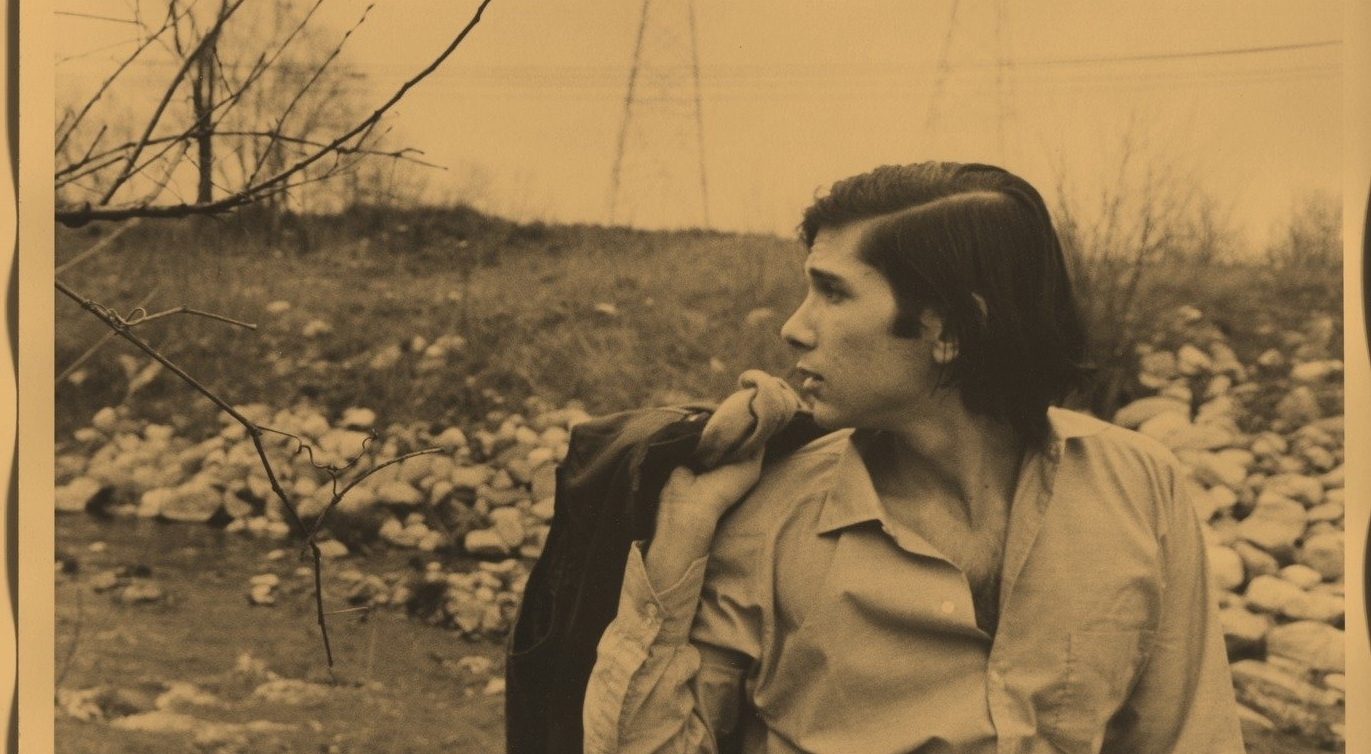
Recording under his own name in the 60s, Paul Myerberg (aka Paul Martin) cut a handful of singles that went largely unnoticed at the time.
Shifting into sound engineering and film work, his music might have been lost forever—until its rediscovery in 1996 revealed a hidden songwriter whose work deserved the light.
 PAUL MARTIN
Six Strings, Infinite Journeys
Jeff Liberman
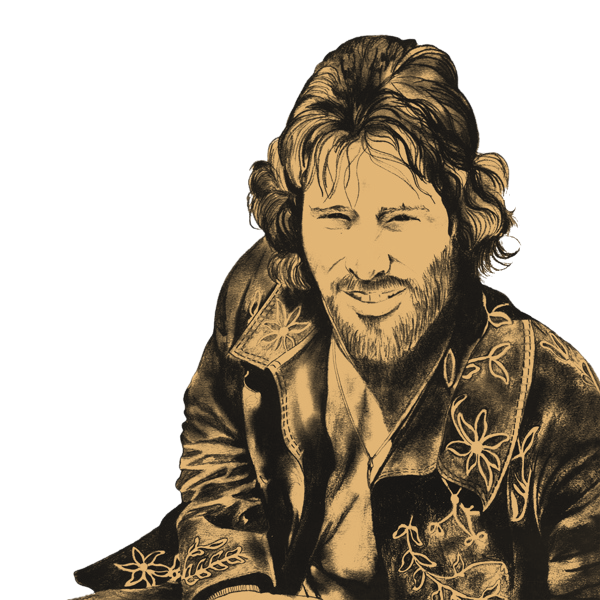
Chicago’s own Jeff Liberman carried the torch of the guitar gods—Hendrix, Trower, Clapton, Zappa—but with his own soulful twist.
Between 1975 and 1978, Liberman self-released three albums on his Librah label, some of the earliest private pressings to later gain cult status.
Virtuosity, melody, and heart in equal measure: that was Liberman’s gift.
 JEFF LIBERMAN
Blind Willie
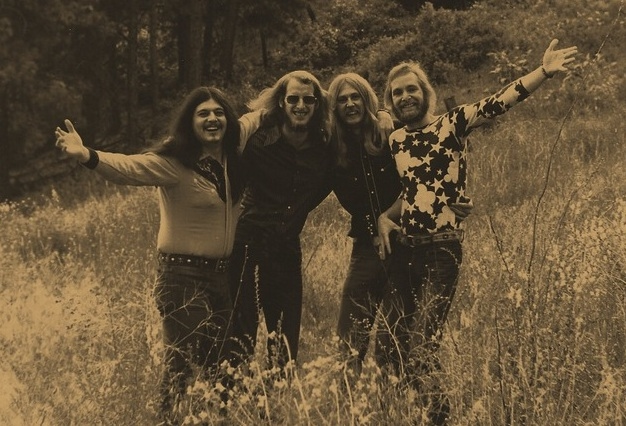
In 1972, Spokane’s Blind Willie lit up the Northern Idaho/Eastern Washington scene with a bold mix of hard-rock, psych, and country-rock. Anchored by guitarist Frank Trowbridge (ex-Sleepy John), they stood out in a region where original music was rare. With major label interest circling, Blind Willie carved a reputation as both authentic and ahead of their time.
 BLIND WILLIE
Second-Wave Psychedelia
United States of Existence
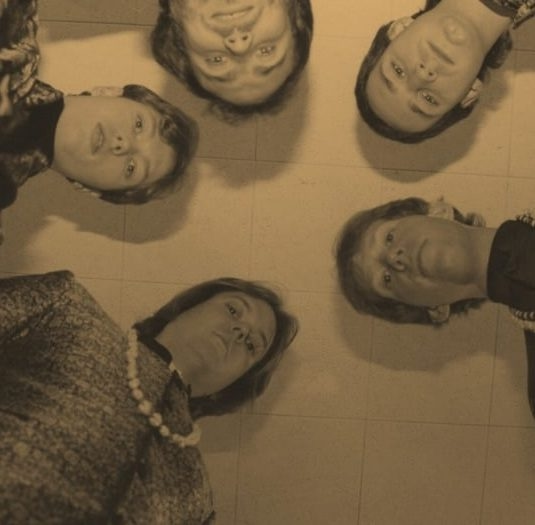
Baltimore, 1978: out of the ashes of prog outfit Klangfarb came United States of Existence, determined to recreate the technicolor magic of 1967–68. With vintage gear, antique recording tricks, and obsessions with Strawberry Alarm Clock and Electric Prunes records, they crafted basement psychedelia that fooled the ear and delighted collectors. Champion Greg Shaw (Bomp!) featured them on Battle of the Garages (1981), and by 1986 they had released their only album on Bam Caruso. A neo-psych cult treasure.
 Oliver
Tyrnaround
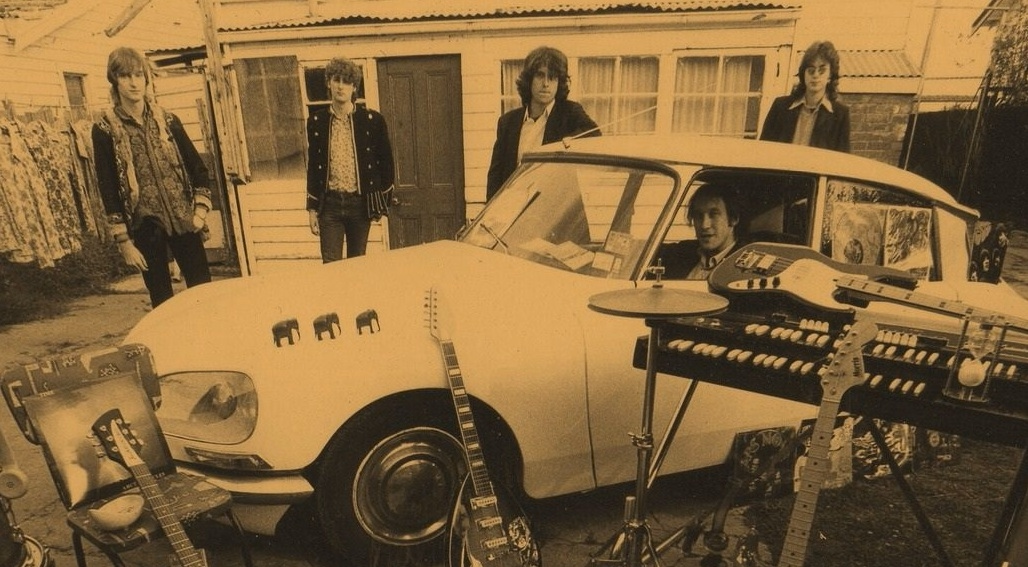
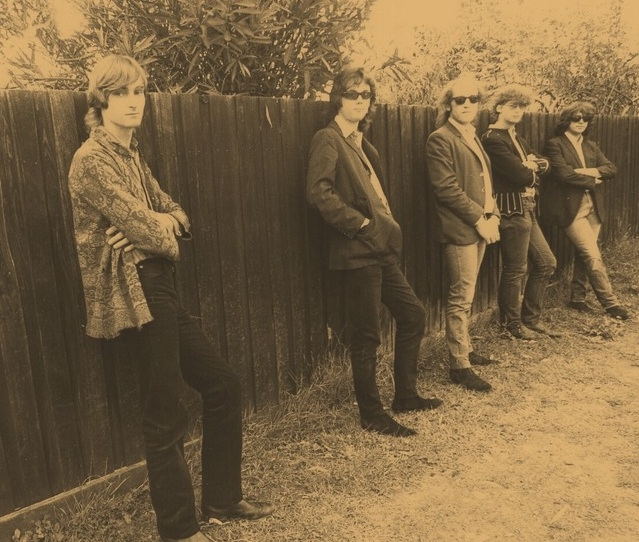
Half a world away in Melbourne, Tyrnaround emerged in 1985 with lysergic pop melodies straight out of Syd Barrett’s dream diary. Their 1986 mini-LP Colour Your Mind became a cornerstone of 80s neo-psychedelia, dripping with fuzz guitars, swirling organs, and surreal harmonies. Influenced by The Dukes of Stratosphear but often surpassing them, Tyrnaround’s music reminds us the psychedelic spirit never really died.
 TYRNAROUND
 TYRNAROUND
Teenage Dreams & Garage Fire
Sound Barrier
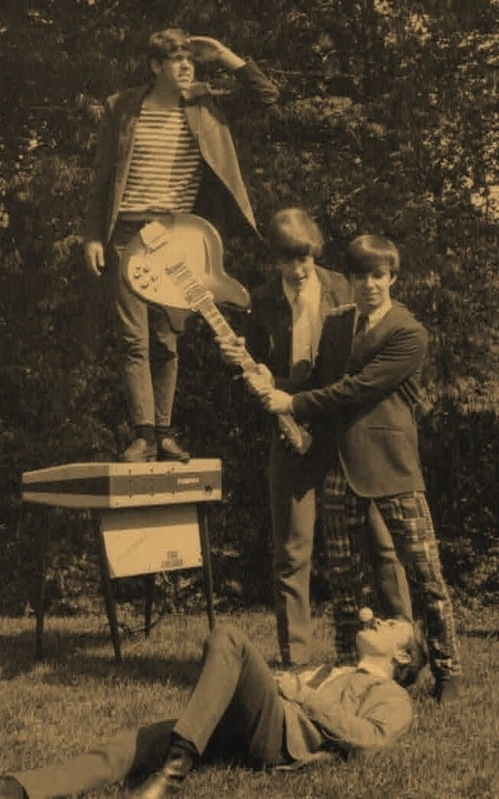
Born from a group of Salem schoolkids inspired by the British Invasion, The Sound Barrier evolved through names (The Spectrums, The Zounds) before arriving at their identity.
By 1968, with powerhouse singer Pat Pshishnic on board, they were tackling The Who and Jefferson Airplane covers with fearless energy.
Their silver-sleeved 45 remains a collectible reminder of just how far youthful ambition can go.
 SOUND BARRIER
The Paragons
One single. One city. One unforgettable song. In 1967, Charlotte’s Paragons released Abba / Better Man Than I on their manager’s Bobbi Records.
It never hit the charts, but DJs, collectors, and garage fans know it as a surefire classic—infectious, melodic, and timeless. Covered by bands across the globe, “Abba” is teenage garage bliss at its purest.
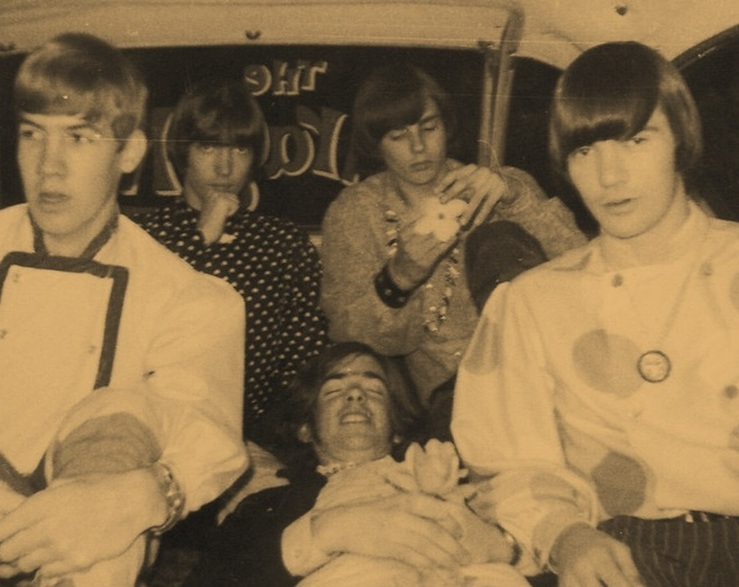 THE PARAGONS
Psychedelia isn’t just a compilation—it’s a portal into hidden worlds where underground bands broke rules, invented sounds, and left behind rare, timeless music.
From psychedelic, progressive, folk, garage, and pop, to funk-folk-psych Middle Eastern treasures, Latin American grooves, disco-funk and new heavy-psych—discover more and license through onestop music.